
How to Source EPE Foam Raw Materials from China: Supplier Qualification, Trial Orders and Shipment Inspection
Introduction
Sourcing EPE foam raw materials from China can give an overseas manufacturer access to LDPE, GMS, talc foaming masterbatch, color masterbatch, antistatic masterbatch and flame-retardant masterbatch through one export-oriented supply route. The business opportunity is real, but a low quotation is not the same as a qualified supply program.
An EPE line is sensitive to the identity and interaction of its materials. A resin with a familiar melt-flow number may still behave differently. A masterbatch may use another carrier or concentration. A sample may perform well but be difficult to trace to the commercial shipment. Documents may describe a product family rather than the exact grade offered.
The buyer’s task is therefore to control four transitions:
- from application requirement to a clear inquiry;
- from supplier claim to verifiable product evidence;
- from sample to a controlled factory trial;
- from approved trial to a traceable shipment and receiving process.
This guide provides a practical workflow for those transitions without assuming that one supplier, grade, test, or contract structure fits every buyer.
Short answer: To source EPE foam raw materials from China, define the finished product and current formulation, qualify the supplier and exact grade, verify current documents, run an identified trial lot on the buyer’s line, and convert the accepted result into a written purchase and inspection specification. Inspect labels, batches, packaging, quantity and documents before shipment, then verify them again at receiving.
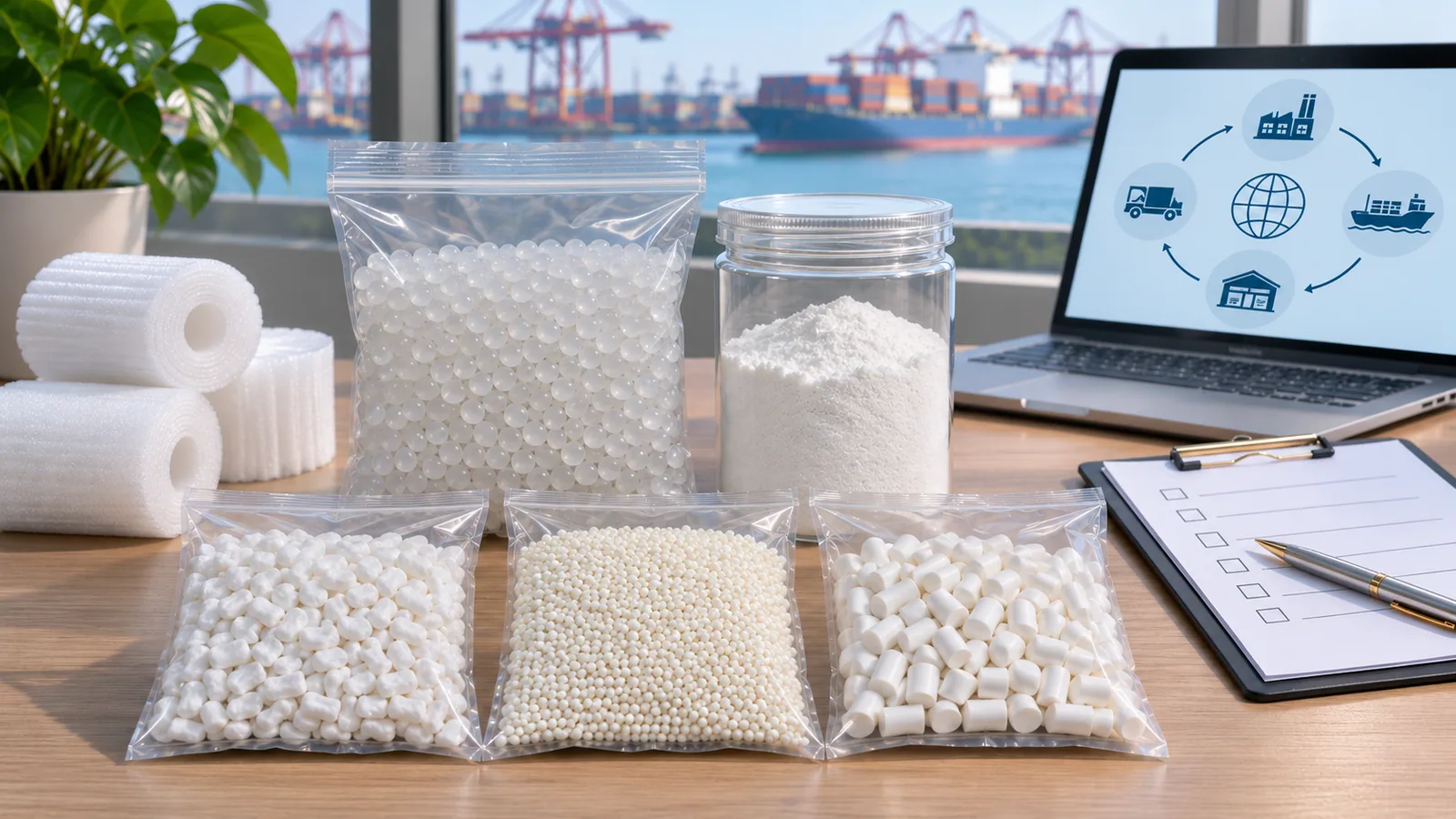
1. Define the requirement before contacting suppliers
“Please quote EPE raw materials” is too broad for a reliable technical or commercial response. A supplier may not know whether the buyer produces thin rolls, thick sheets, fruit nets, profiles, pipe insulation, electronic packaging or laminated products. The right grade and documents may differ.
Prepare a one-page requirement containing:
- material requested: LDPE, GMS, talc masterbatch, antistatic, flame-retardant, color masterbatch, or a combination;
- finished EPE product and application;
- current manufacturer and grade, if disclosure is allowed;
- target thickness, density, width and output range;
- current problem or improvement objective;
- required electrical, flame, color, food-contact or other test context;
- monthly or annual estimated quantity;
- trial quantity;
- packaging preference;
- destination port and delivery term requested;
- documents required for evaluation and customs clearance;
- target timeline.
Photos of the finished product, current labels, foam cross-sections or a defect can improve communication, but remove confidential customer information. If the issue is inconsistent production, provide when it occurs, how it is measured, and whether it follows a batch, shift, weather condition or line change.
2. Decide what type of supplier relationship you need
A manufacturer, authorized distributor, trader and export service company can each be useful. The key is to understand the role, product source, technical responsibility and traceability.
Direct manufacturer
Direct purchasing may provide clear production-source information and access to grade-specific technical support. It may also involve larger minimum orders, a narrower product range, or less flexibility for mixed shipments.
Distributor or export-oriented supplier
A distributor or export service supplier may coordinate multiple materials, smaller trial quantities, mixed loads, export documents and communication. The buyer should still confirm the original manufacturer and grade where the product is branded or source-specific.
Trader
A trader can solve availability and commercial problems, but the buyer should clarify whether the source can change, what traceability is preserved, and who handles a technical claim.
Do not judge credibility only from the business label. Evaluate whether the proposed supply route can consistently deliver the exact approved material with the agreed evidence.
3. Build a supplier qualification file

The depth of qualification should match the material risk, order value, application and buyer policy. A first review can include:
- legal company name and registration information;
- business address and contact channels;
- role in the supply chain;
- product range and source disclosure available;
- export experience relevant to the destination;
- quality and traceability process described in practical terms;
- complaint and corrective-action process;
- sample and batch identification practice;
- storage and packaging controls;
- change-notification practice;
- ability to provide the required product and shipping documents.
A video meeting or remote walkthrough can clarify operations, but it is not a substitute for independent verification when the risk requires an audit. Likewise, a polished website or marketplace badge is not product approval.
If an on-site audit is justified, prepare an agenda. Review receiving, storage, identification, segregation, sample retention, packaging, label control, batch records, inspection equipment, nonconforming material, complaint handling and loading practices that are relevant to the supplier’s role.
4. Verify the exact product, not a category name
“LDPE,” “GMS 95,” “talc masterbatch,” or “antistatic masterbatch” can refer to many grades. The quotation should identify the product sufficiently for document review and later shipment matching.
Ask for:
- exact manufacturer and grade where applicable;
- product form and packaging;
- current technical data sheet;
- current safety data sheet;
- typical data versus guaranteed specification distinction;
- batch document available, such as COA or agreed inspection report;
- relevant regulatory or compliance statements for the intended application;
- storage and shelf-life guidance where applicable;
- sample batch identity;
- commercial shipment label example;
- notification policy for source or formulation changes.
The TDS, SDS and COA serve different purposes. A TDS presents technical information, often typical values. An SDS communicates hazards, handling and emergency information. A COA or batch document reports selected information for a particular lot or shipment. One does not automatically replace the others.
Check document titles, grade names, revision dates, language and issuing organization. A report for a similar product is not evidence for the offered grade.
5. Treat specifications as methods plus limits
A number without its method and condition can create false agreement. For polyethylene, melt-flow and density data depend on named methods and specimen or test conditions. For color, the viewing or instrumental setup matters. For electrical behavior, conditioning, electrodes, test voltage and environment can affect the result. For flame performance, specimen thickness, density, orientation and classification matter.
A usable purchase requirement states:
- property;
- test method and edition when required;
- specimen preparation or conditioning;
- unit;
- limit or agreed reporting requirement;
- sampling frequency;
- action when the result is outside the agreement.
Do not add tests simply to make a specification look technical. Each test should control a real risk or identify the approved material.
6. Use samples to qualify identity and process fit
The sample should be large enough for the intended trial and carry an identity that can be linked to the quotation and future supply. Record:
- supplier;
- manufacturer and grade;
- batch or lot if available;
- date received;
- packaging and label;
- documents received;
- retain-sample location;
- trial result.
Avoid approving an unlabelled bag based only on good production. If the commercial material cannot be matched to the sample, the trial has limited purchasing value.
For multiple candidates, code them for a fair production comparison but preserve the identity in a controlled record. The production team may be blinded to the supplier during evaluation while purchasing or quality retains the key.
7. Plan a controlled factory trial
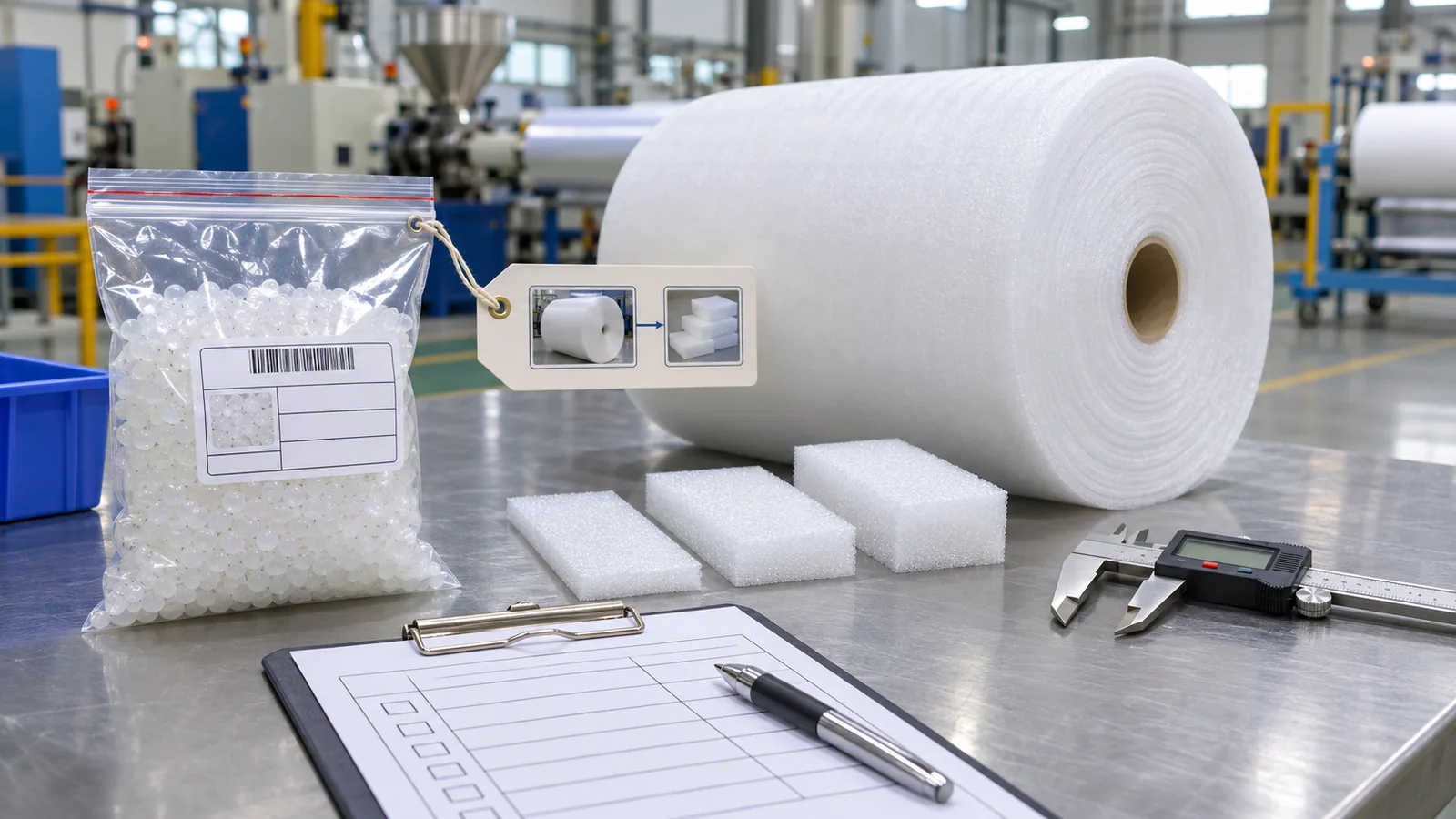
Establish the baseline
Document accepted production with the current material: product, formulation, batches, key settings, ambient conditions, output, scrap, dimensions, cell appearance and downstream conversion. Keep a representative sample.
Define the decision
The trial should answer a purchasing question. For example: can the proposed LDPE produce the accepted roll with comparable stability and output? Can a proposed talc masterbatch improve feeding while maintaining the approved cell structure? Can an antistatic formulation meet the defined property after conditioning?
Control changes
Change one primary material at a time when practical. If a complete formulation is being evaluated, document every component. Allow sufficient purge and stabilization time. Record authorized setting changes and the reason for each change.
Inspect over time
Evaluate startup, stable production and the product after cooling. Recheck dimensions, appearance or function after the interval relevant to the application. Include winding, cutting, bonding, lamination, printing or assembly if those steps affect acceptance.
Create an approval record
State whether the material is approved, conditionally approved, rejected, or requires another trial. Record the application, line, grade, batch, addition level where relevant, operating window, test results, restrictions and document revisions.
This record connects factory experience to future orders without turning one trial into a universal claim.
Mid-article CTA: Send Your Sourcing Checklist
If you are comparing EPE material suppliers, send FULL TECH your product, current grade, target property, trial quantity, estimated order quantity and destination. We can help organize a focused inquiry for LDPE, GMS and the functional masterbatches currently in scope.
8. Compare quotations on the same basis
Normalize the commercial details before comparing price:
- exact product and grade;
- original manufacturer or source condition;
- net weight and packaging;
- minimum order and trial quantity;
- currency;
- Incoterm and named place;
- validity period;
- payment terms;
- lead time definition;
- export and destination charges included or excluded;
- document package;
- inspection cost;
- sample policy;
- claim process.
A low EXW price cannot be compared directly with a delivered or port-based offer. Likewise, a mixed container service and a full-container single-grade offer solve different purchasing problems.
Evaluate total cost per accepted output. Include ocean or land transport, customs, financing, handling, warehousing, production trial cost, scrap, line adjustment, test fees and the risk of an unusable batch.
9. Convert the approved trial into a purchase specification
The purchase order should not collapse back to a generic product name. Include the approved identity and controls, such as:
- supplier product and grade;
- manufacturer and grade where agreed;
- approved source or source restrictions;
- packaging type and unit weight;
- total quantity and tolerance;
- batch or lot identification;
- required documents;
- agreed inspection scope;
- label and shipping marks;
- pallet or container requirements;
- storage and transport conditions from current documentation;
- change-notification requirement;
- claim notification and evidence process;
- reference to the approved sample or factory trial.
If the buyer permits alternative sources, define how an alternative is proposed and requalified. Do not let an urgent shipment silently change the approved grade.
10. Plan pre-shipment inspection around real risks

Inspection cannot prove every performance property, especially when the relevant test requires conditioning, production, or a specialized laboratory. It can still reduce identity, quantity, packaging and documentation risk.
Document review
Match the commercial invoice, packing list, batch documents, product labels and purchase order. Check grade names, quantities, weights, batch numbers and consignee or shipping details.
Packaging and label inspection
Check bag or drum integrity, seals, contamination, moisture exposure, pallet stability, markings and photographable batch identity. Confirm that labels remain visible after palletization.
Quantity verification
Count units and review net and gross weights according to the agreed sampling plan. If weighing is required, define the scale and method.
Product checks
Where practical and contractually agreed, inspect appearance, pellet consistency, contamination or selected rapid identity properties. Sampling should be representative and tamper-controlled. Laboratory tests must use the agreed method.
Container and loading inspection
Check that the container is clean, dry, free from obvious damage or strong odor, and suitable for the packaging. Record loading sequence, pallet condition, bracing or protection and seal number.
An inspection report should state what was and was not checked. Photographs are evidence of observed condition, not proof of untested performance.
11. Prepare import, receiving and storage before shipment

Confirm tariff classification and destination import requirements with a qualified customs broker. The supplier can provide product information, but the importer remains responsible for local compliance and declarations.
Before arrival, prepare:
- receiving checklist;
- dry, appropriate storage space;
- quarantine area for damaged or unidentified material;
- batch entry in the inventory system;
- retain-sample procedure if used;
- production release authority;
- trial or first-batch monitoring plan;
- process for reporting damage or discrepancy within contractual time limits.
At receipt, compare the seal and shipment documents where relevant, inspect external condition, record damage before unloading when safe, and match labels and batch numbers. Do not feed material that cannot be identified.
12. Manage claims with evidence
When production performance changes, preserve evidence before adjusting everything. Record the material batch, line, product, formulation, settings, time, environment, defect, photos, samples and comparison with the approved baseline.
Notify the supplier within the agreed period and describe the containment action. Separate shipping damage, identity discrepancy, document error and process-performance concern; they may require different evidence and remedies.
A strong corrective-action discussion asks:
- What changed?
- Which batches and shipments are affected?
- How was the cause verified?
- What immediate containment is in place?
- What prevents recurrence?
- Does the approved specification or change-control process need revision?
13. Red flags during supplier qualification
Investigate further when a supplier:
- will not identify the exact grade after requiring a paid order;
- sends documents with mismatched product names;
- offers a universal dosage or guaranteed finished-foam result without line information;
- treats an SDS as a performance certificate;
- claims finished-product certification from a raw-material description;
- cannot connect the sample to a commercial batch;
- changes source without notice;
- refuses to define packaging, labels or inspection scope;
- pressures payment before basic company and product evidence is reviewed;
- avoids written confirmation of key quotation terms.
One red flag does not always prove misconduct; it does mean the risk has not been controlled.
Frequently Asked Questions
How do I find a reliable EPE foam raw material supplier in China?
Start with a clear requirement, verify the legal company and supply-chain role, review exact grade documents, check sample traceability, run a factory trial and use a written purchase and inspection specification. Reliability is demonstrated through repeatable evidence, not only a website or quotation.
Should I buy directly from a manufacturer or through an export supplier?
It depends on volume, product range, trial quantity, technical access and logistics needs. Direct supply may suit large single-grade demand; an export-oriented supplier may coordinate multiple materials and smaller trials. Confirm source, traceability and responsibility in either model.
What documents should I request for LDPE or masterbatch?
Common documents include a current TDS, SDS, product identification, batch or shipment document, packaging information and relevant compliance statements for the intended application. The exact set depends on product, market and buyer policy.
How large should a trial order be?
It should be large enough to purge the line, reach stable production, produce samples for delayed and downstream checks, and retain evidence. The quantity depends on line size, material changeover and product; define it with the production team rather than copying a generic amount.
Can a pre-shipment inspection guarantee material performance?
No. It can verify agreed identity, packaging, labels, quantity, documents and selected tests within its scope. Performance that depends on extrusion or specialized testing must be controlled through trial approval, representative sampling and the agreed test process.
What Incoterm should I use?
Choose it with a logistics and trade professional based on control, experience, destination and cost transparency. Always name the place or port and the Incoterms edition in the contract. A three-letter term without a named place is incomplete.
How do I prevent the commercial shipment from differing from the sample?
Record the sample’s exact grade and batch, reference the approved trial in the purchase specification, require matching labels and documents, define source-change notification, and inspect the commercial shipment before release.
Conclusion
Successful EPE raw-material sourcing from China is a controlled qualification process, not a search for the lowest price list. The buyer defines the finished-product requirement, verifies the supplier and exact grade, qualifies an identified sample on the real line, and preserves that approval through contract, shipment inspection and receiving.
This process does not remove every production or logistics risk. It makes the remaining risk visible, assigns evidence to each decision and gives both buyer and supplier a clearer basis for repeat orders and problem solving.
Final CTA: Build Your EPE Material Inquiry
Share your finished product, current material, target property, trial quantity, estimated order quantity and destination with FULL TECH. We can organize a focused follow-up for LDPE, GMS, talc foaming masterbatch, antistatic, flame-retardant or color masterbatch requirements.
Technical and Commercial References
- ASTM International plastics resources — examples of named methods for melt flow, density and other polyethylene properties.
- Entec Polymers, Polyolefin Foam Extrusion Overview — technical context and explicit requirement for the user to evaluate suitability.
- EOS/ESD Association, Fundamentals of ESD, Part 3 — electrical packaging functions and test context.
- UL Solutions, Combustion (Fire) Tests for Plastics — finished-specimen flammability methods and classification distinctions.
- International Chamber of Commerce, Incoterms® Rules — use the agreed edition and named place; consult a trade professional for contract application.
